

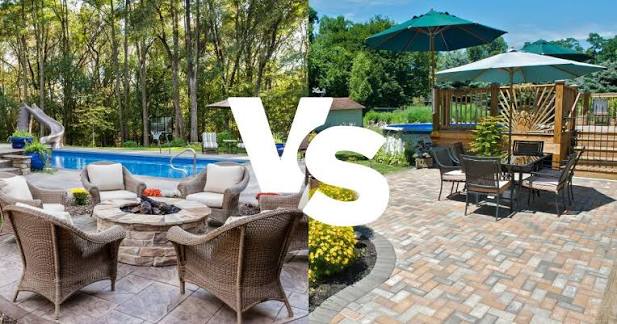
Stamped concrete patios and traditional patio options each bring their own set of strengths for Central Ohio homes. Homeowners often weigh both appearance and lasting value before making a choice that fits their lifestyle. Stamped concrete stands out with its creative patterns, color blends, and ability to mimic stone or brick at first glance. Traditional paver patios offer flexible shapes but can lag behind stamped styles in surface design variety.
Installation costs may seem clear upfront, yet the total investment grows when you account for future repairs and upkeep over time. Choosing between the two depends on what matters most: bold visual appeal or easier repairs when wear and tear appear over time.
Durability during Central Ohio’s tough weather is another area where the options can differ.
Comparing Stamped Concrete and Traditional Patios: Durability in Central Ohio
Stamped concrete patios stand out for their solid, one-piece build. The one-piece slab can last around 15–25 years when your contractor installs it with a solid base in Central Ohio’s climate, based on groundsdesign.com. Freeze-thaw cycles in this region can lead to cracks over time, but control joints help manage those stress points.
Traditional patios with individual units, like concrete pavers, are built to flex and resist ground movement. Their segmented structure cuts the chance of large cracks forming across the whole surface.
Stamped concrete repairs are easier to spot, while small repairs on traditional patios blend in better. Both options need routine care, but the durability you need depends on your soil, weather, and how much use your patio gets.
For homeowners considering stamped concrete patio services in Central Ohio, think about both your day to day wear and winter freeze cycles when you pick your best fit.
Design Versatility: Customization Options for Modern Outdoor Spaces
The differences in how stamped concrete and traditional patios are built directly affect how much you can do with your outdoor space. Design flexibility gives you more control to shape, tint, and pattern a surface that fits your style and how you use your home.
- Stamped concrete can be textured to mimic natural stone, brick, or even wood, so you can match the look to your home’s style.
- You get a wide range of color options through integral color, surface-applied stains, or antique accents, which you can combine into a custom palette that suits your taste.
- You also have more room with patterns and shapes, so you can create flowing borders, medallions, or geometric features that make your patio unique.
- Traditional patios, like pavers, offer mix-and-match shapes but tend to have more limited surface designs than the custom imprinting possible with stamped concrete. With so many choices, you have plenty of room to balance function and style in your outdoor living space before you consider costs and upgrades.
Cost Breakdown: Upfront vs. Long-Term Investment Factors
Costs can differ significantly between stamped concrete and traditional patios in Central Ohio. It helps to break down both upfront cost and what you may pay later so you can see true value over time.
- Upfront Installation: You may find that stamped concrete patios have a lower upfront installation cost per square foot than pavers of the same size.
- Customization Expenses: Adding more colors, patterns, or special finishes can increase the price of stamped concrete and standard patio materials.
- Long-Term Repairs: Stamped concrete may cost more to patch or reseal because repairs can be difficult to blend; paver repairs often blend in better and may cost less.
- Maintenance and Longevity: Both stamped concrete and pavers need care, but maintenance frequency, resealing, and repair choices can shift total costs over time.
Maintenance Considerations: What Homeowners Need to Know
Keeping a stamped concrete patio looking its best requires a simple but steady routine. Sweep away leaves and dirt, then rinse the surface to help prevent stains and grit from building up. Resealing your stamped concrete every two to three years helps protect its color and finish.
For most homeowners in Central Ohio, this routine keeps a patio bright and free from wear. Fixing small chips or cracks is usually easy, but matching the surface look after a big fix can be hard. Paver patios make repairs easy since single stones can be replaced, though you may need more joint upkeep and weed control.
Stamped concrete slabs have no joints where weeds can grow, which saves you time year after year. Overall, both choices need ongoing care, but stamped concrete offers a lower-care routine if you keep up with resealing.
Stamped concrete services offer a wide range of style options that bring creativity and custom flair to your Central Ohio outdoor space. Traditional patio choices, such as pavers, give you flexibility in shape and repairs but usually come with fewer surface designs.
Both options stand up well against Ohio’s freeze-thaw cycles if you keep up with routine maintenance. Simple cleaning and resealing can help a stamped concrete patio retain its color and appearance for years.
With paver patios, fixing one section is quick, though you might spend more time keeping weeds out of the joints. Customization can raise costs on both stamped and traditional patios, but each gives lasting value if done well.
The upfront investment in a stamped concrete patio is often lower per square foot than that of pavers, though bigger fixes can cost more over time. Over the long term, your repair needs will depend on whether you prefer seamless concrete or easy-to-blend pavers.
Homeowners in Bellefontaine and across Central Ohio trust Coughlin Concrete to guide those decisions with skill, clear advice, and dependable service. Every project draws on years of local craftsmanship and a focus on making outdoor spaces both practical and unique.
No matter the patio style you pick, working with patio contractors who care about detail helps ensure your space will last.
